

What's Trending in the Pokémon TCG Right Now
Thirty years ago, a little cardboard Charizard quietly changed the world. In 2026, the Pokémon Trading Card Game is bigger than it has ever been — and right now it's moving fast. New Mega Evolutions are dropping every few weeks, the anniversary hype is building toward September, and the secondary market has roared back to life after a couple of quieter years.
If you've been away from the hobby for a bit, or you're just trying to work out where to point your attention (and your wallet), this is your catch-up. Here's everything heating up in the Pokémon TCG this month, ranked by how loud the noise is right now.
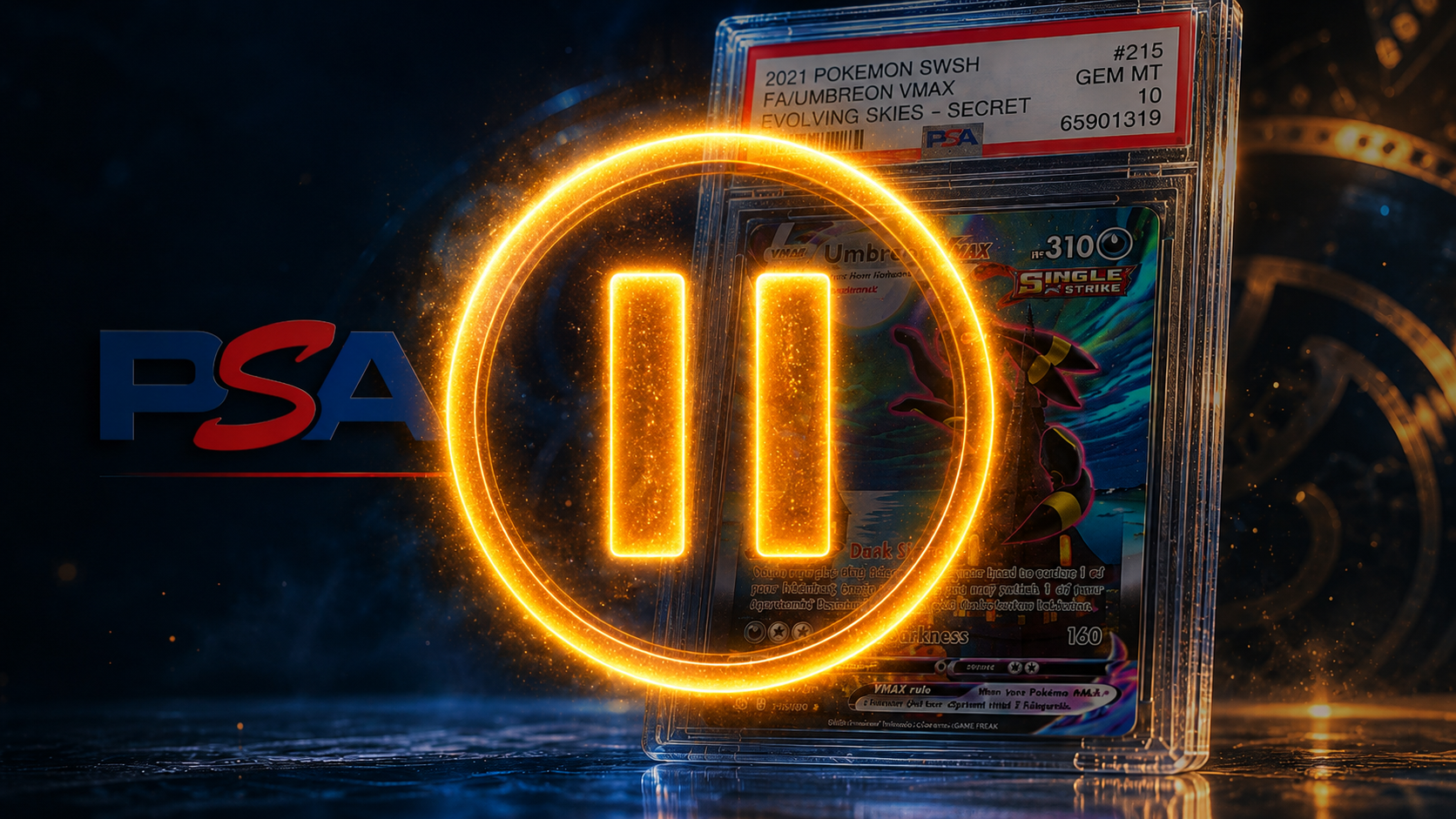
PSA Just Hit Pause
The world's biggest grading company is buckling under a backlog approaching ten million cards, and at the same time, graded slabs are being shown the door at official Pokémon events. Here's what's actually happening, and what it means for your collection.
If you've been thinking about sending cards off to be graded, you picked an interesting week to do it. As of 2 June 2026, PSA, the most recognised grading company on the planet, has temporarily stopped taking new submissions for several of its most popular budget grading tiers. The reason is simple, and a little staggering: their backlog is closing in on ten million cards.
This isn't a small operational hiccup. PSA is the name that moves the market, a PSA 10 generally commands a premium over the same card graded elsewhere, purely on brand recognition. So when PSA sneezes, the whole hobby catches a cold. Let's break down what's going on, why it happened, and the practical moves worth making while the dust settles.
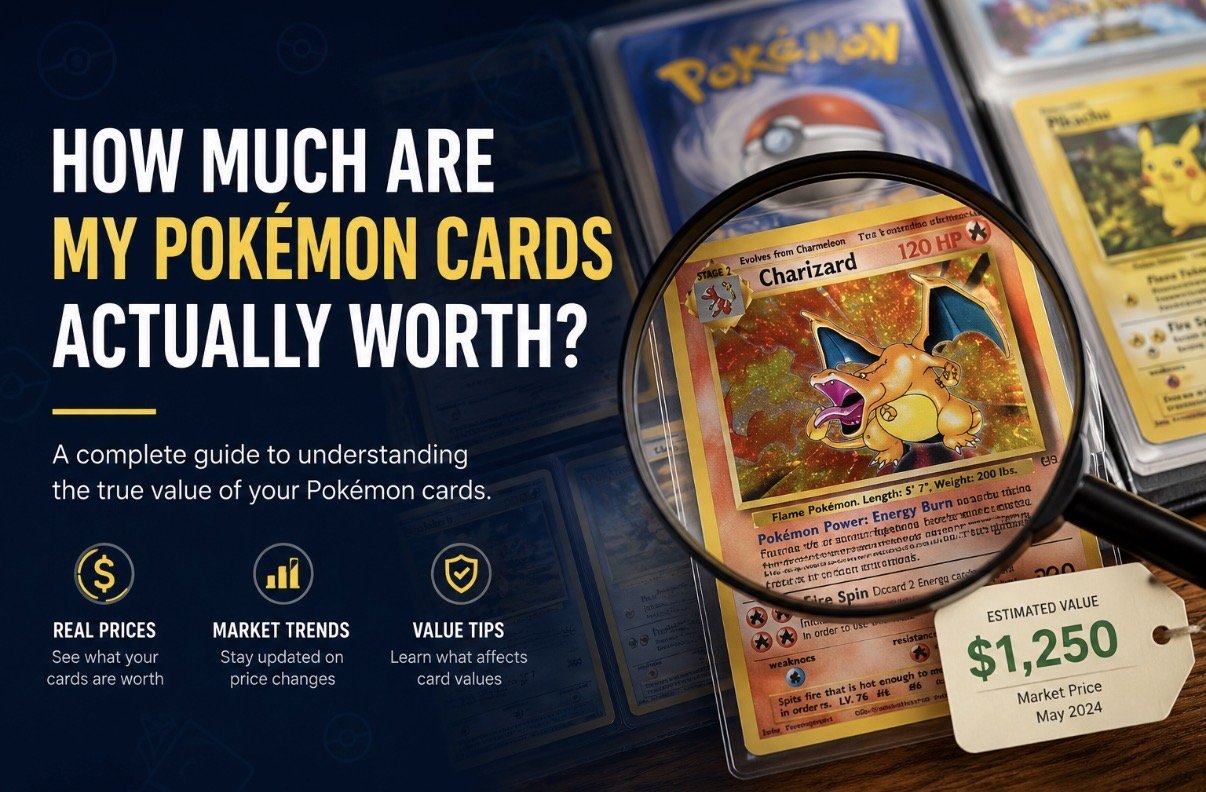
How Much Are My Pokémon Cards Worth?
If you've just pulled a dusty binder out of the cupboard, you're probably staring at a few hundred Pokémon cards and wondering the same thing everyone does: is this a small fortune, or just a stack of childhood nostalgia?
The honest answer is that it could be either. Some Pokémon cards are worth a few cents. Others have sold for millions of dollars. The same character, Charizard, say, can be worth $5 or $500,000 depending on the set, the print run, and the condition of the cardboard in your hands.
This guide walks you through exactly how to work out what your cards are worth, in plain language, without assuming you know a holo from a reverse holo. By the end you'll be able to glance through that binder and confidently flag the cards that deserve a closer look.
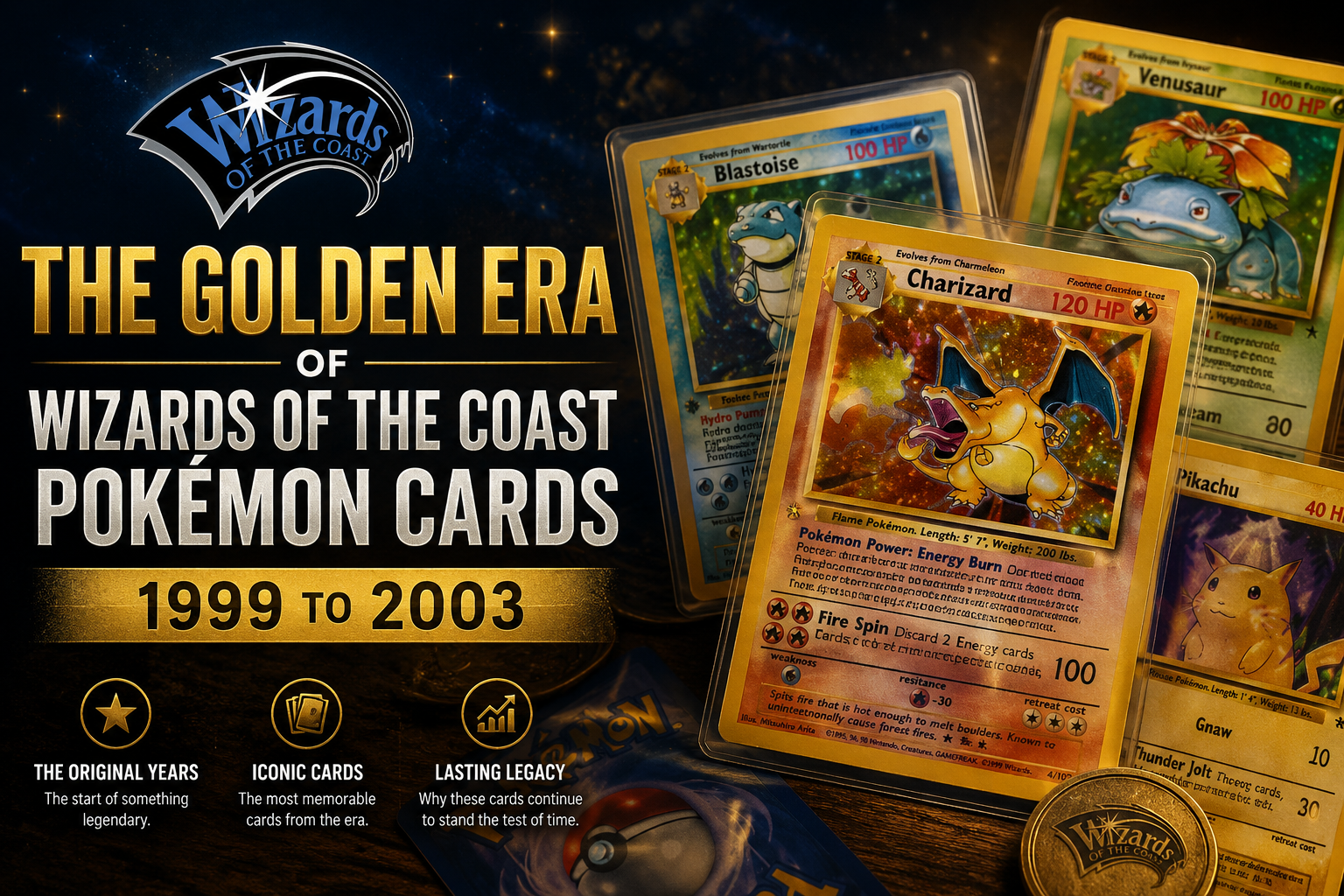
The Golden Era: Wizards of the Coast Pokémon Cards, 1999–2003
Every set. Every print variant. The original retail prices. Where the market stands today. And why the WOTC era including Australia's unique piece of this history, remains the most important chapter in vintage Pokémon collecting.
There is a before and an after in Pokémon TCG collecting. The before is everything Wizards of the Coast made between 1999 and 2003. The after is everything that came next. This distinction is not nostalgia - it's market logic. WOTC-era cards have a fixed, permanently declining supply, a 25-year track record of appreciation, and a cultural resonance that no modern set has yet replicated at scale.
This guide is the complete record of that era: what was made, when it was made, what it cost at the time, what it costs now, and why the WOTC story extends beyond the United States - with Australia playing a fascinatingly unique role in the history of these cards.
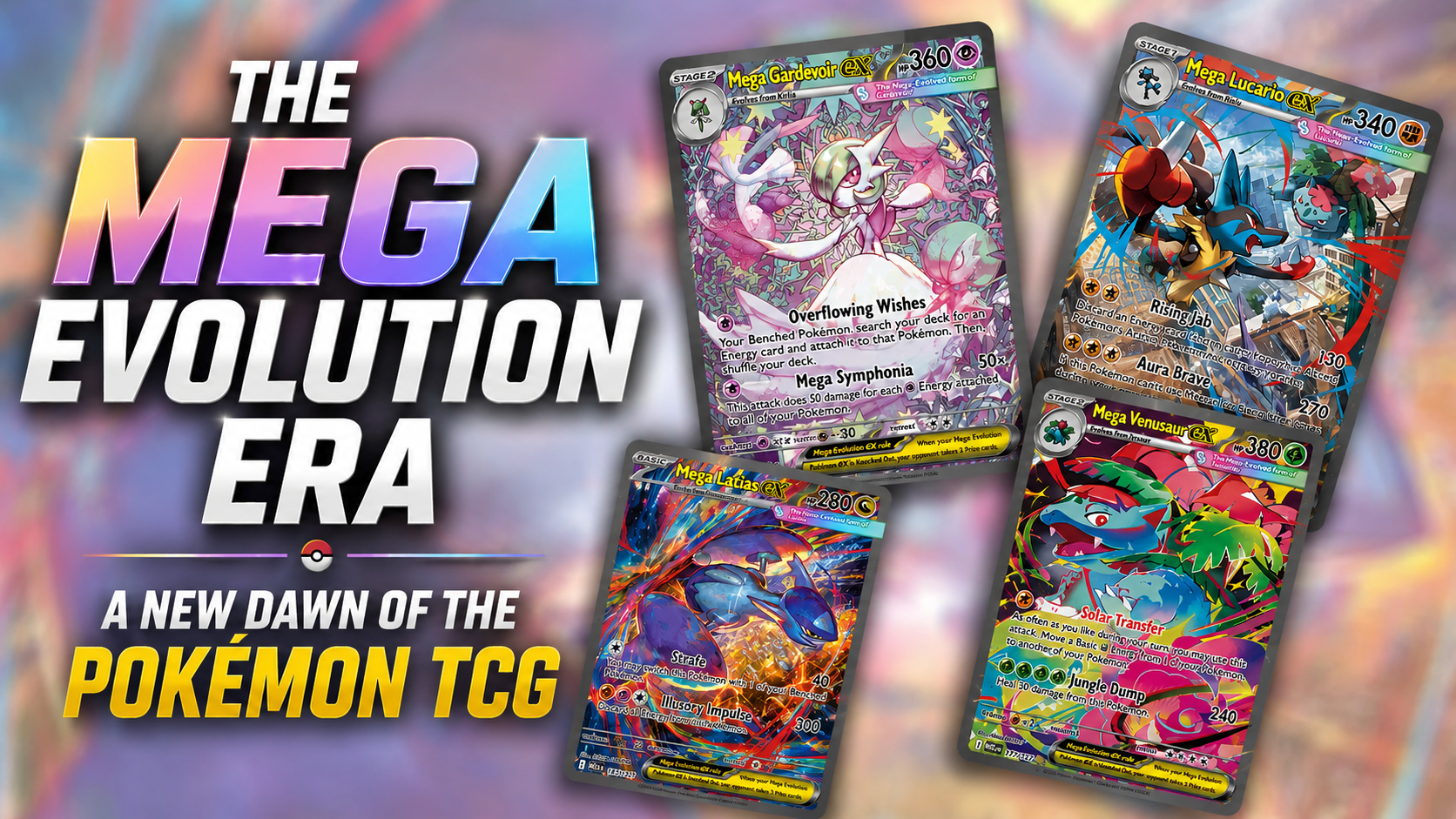
The Mega Evolution Era : A New Dawn for the Pokémon TCG
What Is the Mega Evolution Era?
After more than 15 sets spanning the Scarlet & Violet era, the Pokémon Trading Card Game officially entered a brand new chapter in September 2025: the Mega Evolution era. Inspired by Pokémon Legends: Z-A (released October 2025 on Switch 2), this era reintroduces the fan-favourite Mega Evolution mechanic after nearly a decade's absence from the main competitive game. It marks the first time since the XY era (2013–2016) that Mega Pokémon have taken centre stage, and the reception has been nothing short of extraordinary.
Critically, this is also one of the few eras in TCG history not based on a mainline numbered game - the last being the HeartGold & SoulSilver era in 2009. Instead, it's built around a side-game spin-off, making it feel refreshingly different for longtime collectors who had grown weary of the Scarlet & Violet formula.
The era retains the beloved mechanics of its predecessor - the ex mechanic, Illustration Rares, Special Illustration Rares, and Special Illustration Rare Trainer Supporters - while introducing bold new additions: the Mega Hyper Rare (MHR), also called the Mega Ultra Rare (MUR), an entirely new gold-card tier unlike anything seen before. Unlike previous gold cards (which were simply gold-coloured versions of their Full Art counterparts), the Mega Hyper Rares feature brand-new, unique illustrations - making them genuinely distinct collector items, not just palette swaps.

LUKE THE RIPPER — POKÉMON DEEP DIVE — From Saturday Morning Cartoons to $16 Million Cardboard
There's a card. It's roughly the size of a playing card. It's made of cardboard and ink. And in February 2026, someone paid $16,492,000 for it.
That card, the legendary Pikachu Illustrator, sold at Goldin Auctions to venture capitalist AJ Scaramucci, shattering every record in the process, while confetti literally rained down on a YouTube livestream. The seller? Logan Paul, who had bought it for around $5.3 million just a few years earlier and walked away with a roughly $8 million profit. For a piece of cardboard.
If you told someone in 2015 that this was where Pokémon cards were headed, they would've laughed at you, and then maybe gone to check if their old binder was still in the attic. Because the story of Pokémon cards over the last decade is one of the most bizarre, exhilarating, and genuinely instructive tales in the history of collectibles. It's got nostalgia, a global pandemic, celebrity drama, Costco brawls, international crime waves, and yes, numbers that make the S&P 500 look like a savings account.
Let's go back to the beginning.